
Residential Concrete Driveways in Madison, AL
Madison Superior Concrete pours residential concrete driveways in Madison, AL, and has been doing it as a family-owned, licensed contractor since 1957.
A driveway is the largest single piece of concrete most homeowners will ever buy. It carries vehicle loads every day, takes the full sun, and moves with the ground under it through every wet spring.
We handle the whole job: demo of the old slab, excavation, base compaction, forming, reinforcement, the pour, and the finish. Free quote, no obligation, and a straight answer about what your lot actually needs.

Tear-Out · Base Compaction · 4,000 PSI · Rebar & Mesh · Broom · Stamped · Exposed Aggregate
Concrete Driveway Replacement and New Pours
Most of the driveways we replace in Madison were poured too thin over dirt that never got compacted. They held up for a decade, then the panels started rocking under a truck tire and the cracks opened up.
We tear the old slab out, haul it off, and start over at the subgrade. That means cutting to depth, proof-rolling the base, and adding crusher run where the soil is soft. The concrete goes down last, not first.
New construction driveways get the same treatment. We coordinate with your builder so the pour happens after the heavy equipment is off the lot, not before it chews the base up.
- Full driveway tear-out and haul-off
- New pours on new-construction lots
- Driveway widening and turnaround pads
- Apron and street-tie-in replacement
- RV and boat parking pads

Driveway Thickness and Reinforcement
Four inches is the standard for cars and half-ton pickups. If you park a dually, an RV, or a work trailer on it, we go five or six and thicken the edges where the wheels track.
Reinforcement follows the same logic. Wire mesh is fine for a straight residential drive. Rebar on 18-inch centers goes in when the slab is carrying real weight or spanning a section of fill dirt we could not fully compact.
Control joints get cut within about 12 hours of the pour, at spacing roughly two and a half times the slab thickness in feet. Concrete is going to crack. Joints decide where.

Driveway Finish Options
A broom finish is what most Madison homes get, and there is nothing wrong with that. It grips in the rain, it hides dirt, and it costs the least.
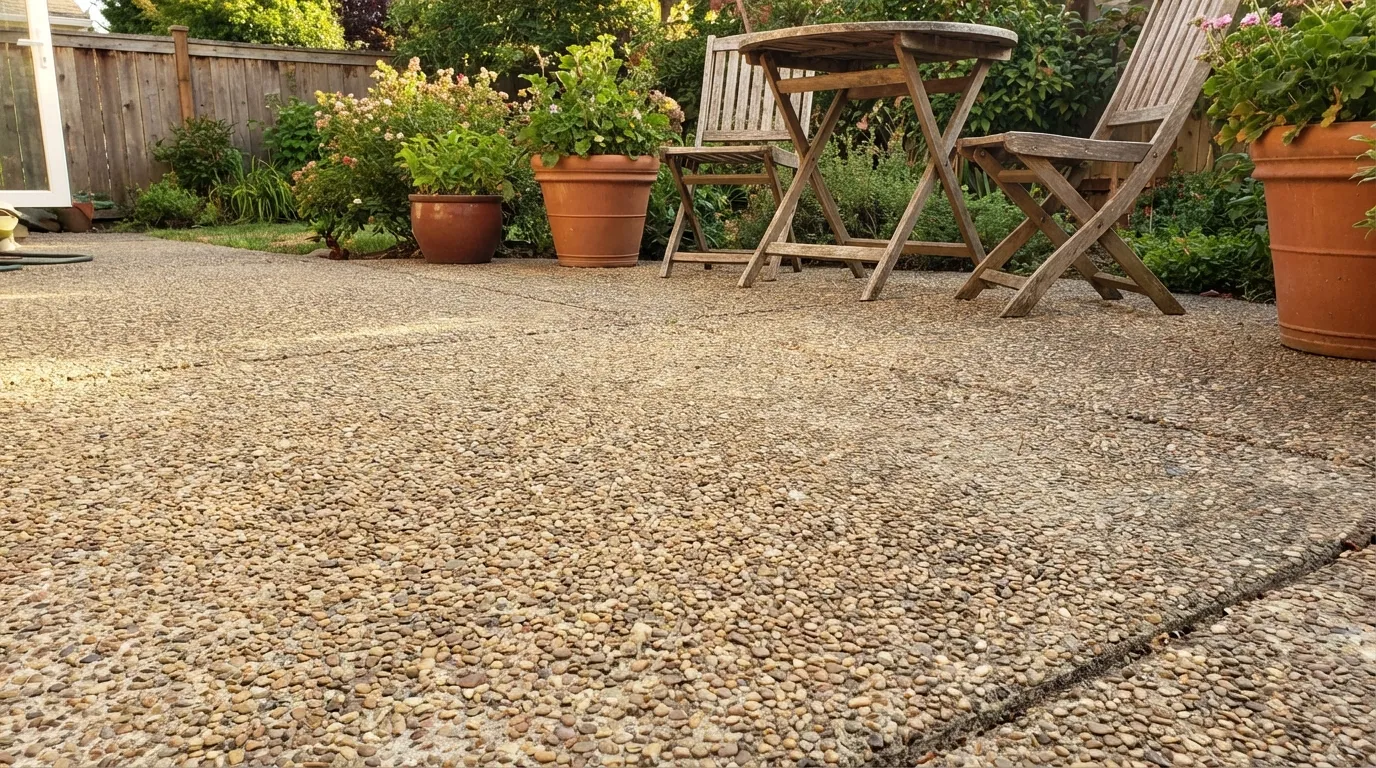
If you want the drive to do more work visually, we stamp a border, saw-cut a pattern into the field, or run exposed aggregate across the whole surface. A stamped border with a broom field is the best value upgrade we sell.
Color is either integral, mixed into the truck, or a dry-shake hardener broadcast on top. Integral color is more consistent. Hardener gives a denser, more wear-resistant surface. We will tell you which one fits the job.
Driveway Options and What They Suit
Every option below gets the same base prep and the same mix. What changes is the surface and what it costs to get there.
| Driveway Type | Best For |
|---|---|
| Broom finish, 4 inch | Standard cars and light trucks |
| Broom finish, 6 inch | RVs, dual-wheel trucks, equipment trailers |
| Stamped border, broom field | Curb appeal without a full stamped price |
| Full stamped | Front-of-house drives on visible corner lots |
| Exposed aggregate | Sloped drives that need extra wet traction |
Driveway Installation Process
Here is exactly what happens between the day you sign and the day you park on it.
-
1. Site Walk and Measurement
We measure the run, check the fall from the garage slab to the street, and look at where water currently pools. If the grade fights us, we say so before you sign anything.
-
2. Demo and Excavation
Old concrete comes out and goes to a recycler. We excavate to depth and pull out any soft or organic soil that would settle later.
-
3. Base and Compaction
Crusher run goes down in lifts and gets compacted with a plate or roller. This is the step that separates a driveway that lasts 40 years from one that fails in eight.
-
4. Forms, Reinforcement, and Pour
We set and stake forms to the finished elevation, place mesh or rebar on chairs, and pour 4,000 PSI mix straight off the truck. Nobody adds water at the chute to make it easier to move.
-
5. Finish, Joints, and Cure
Bull float, edge, broom, then cut control joints once the surface can take it. We apply a cure-and-seal compound and leave you a written schedule for when you can walk and drive on it.
Why Our Driveways Hold Up
Driveways are the most abused flatwork on a residential property. These are the four things we do differently.
No Water at the Chute
Adding water on site makes concrete easier to place and weaker forever. We order the right slump and use a plasticizer if the mix needs to move.
Compaction Testing
We proof-roll the base before forms go up. If a spot pumps under the roller, we dig it out instead of pouring over it and hoping.
Joints Cut on Time
Cut too early and the saw ravels the edge. Cut too late and the slab has already picked its own cracks. We watch the set and cut in the window.
Drainage Checked First
A driveway that sends water toward your foundation is a problem we created. We shoot elevations before we pour, not after.
Frequently Asked Questions
How thick should my driveway be? +
Four inches handles passenger cars and half-ton trucks with no trouble. Go to five or six inches if you park an RV, a dually, a boat on a tandem trailer, or if delivery trucks regularly back in. The thicker pour costs more in concrete but almost nothing more in labor, so it is usually worth it if you are on the fence.
How long before I can drive on a new concrete driveway? +
Seven days for a normal car, and we would rather you wait ten in cold weather. Foot traffic is fine after 24 to 48 hours. Concrete keeps gaining strength for 28 days and reaches its rated PSI at that point, so keep heavy trucks and dumpsters off it for the first month.
Will my new driveway crack? +
Somewhere, eventually, yes. All concrete cracks. The job of the control joints is to make it crack in a straight line at the bottom of a saw cut where nobody notices. What we can prevent is the ugly kind of cracking, which comes from a weak base, a slab that is too thin, or joints that were never cut.
Can you match my existing concrete? +
Close, not exact. New concrete cures lighter than old concrete and takes a year or two to weather in. If we are replacing one section of a larger drive, we can match the finish texture and joint layout, and the color difference will narrow over time. If an exact match matters to you, replacing the whole surface is the honest answer.
Do you seal new driveways? +
We apply a cure-and-seal after finishing, which locks moisture in during the critical early cure. That is different from a maintenance sealer. We suggest a penetrating sealer at the one-year mark and every three to four years after, especially if you use any kind of deicing product in the winter.
Need a New Driveway?
Free on-site measurement and a written quote. Family-owned and pouring concrete in Madison since 1957.