
Concrete Patios and Walkways in Madison, AL
Madison Superior Concrete builds concrete patios and walkways in Madison, AL, with nearly 70 years of flatwork behind every slab we pour.
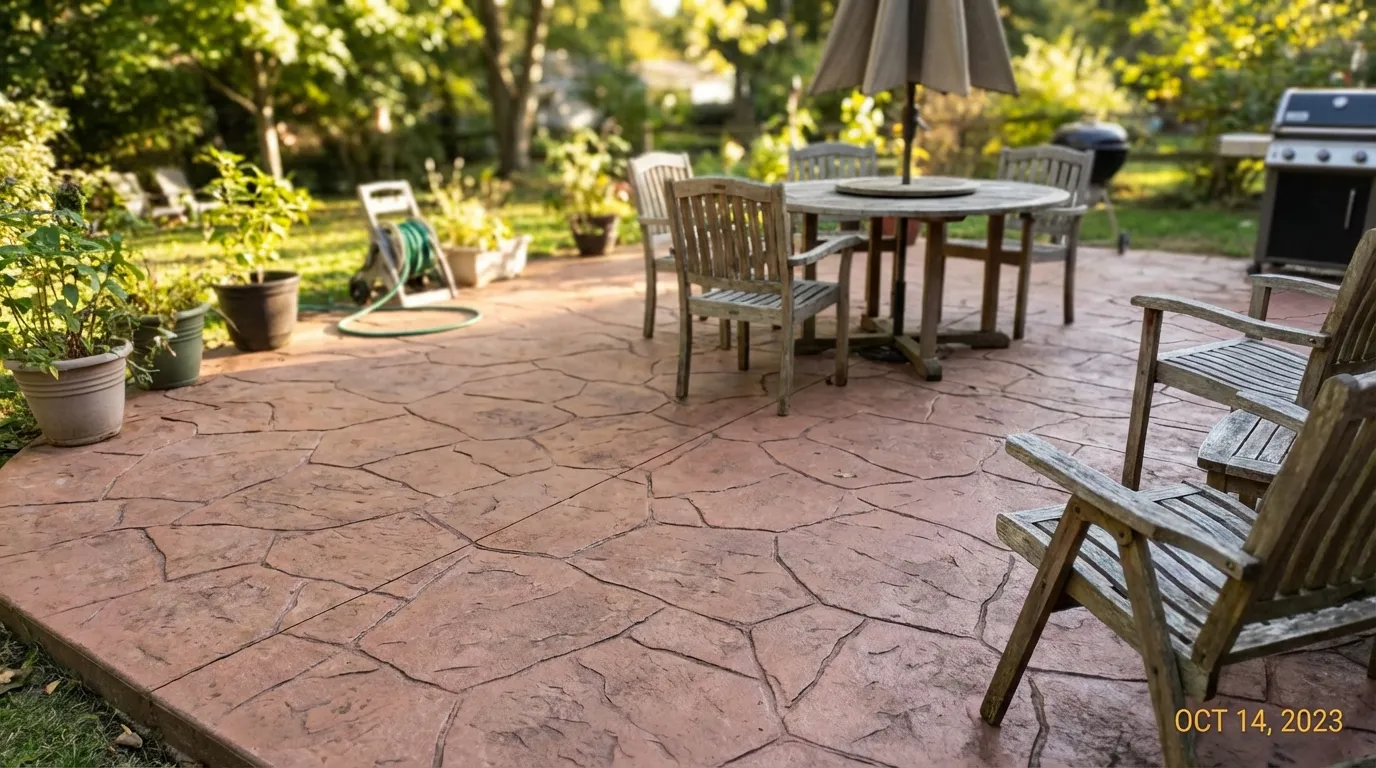
A patio is where you actually use your backyard. It has to be big enough for the furniture you own, drain away from the house, and hold its texture when it is wet and you are barefoot.
We handle patio slabs, connecting walkways, porch pads, steps, and fire pit pads. Every quote starts with an outline painted on your ground so you can walk the size before we dig.

Patio Slabs · Front Walks · Steps · Fire Pit Pads · Laser-Set Fall · Isolation Joints · Light Broom Finish
Concrete Patio Installation
The first question we ask on a patio job is not how big. It is where does the water go. A patio that traps runoff against the back of your house causes more expensive problems than the patio solved.
We shoot elevations from the door threshold out to the yard and set a minimum quarter inch per foot of fall. On a flat lot that sometimes means a step down or a shallow trench drain along the low edge.
Sizes run from a 10 by 12 grill pad up to full wrap-around slabs with a fire pit pad and a walkway tying into the driveway. We form curves with flexible board when the design calls for it instead of squaring everything off by default.
- Rear and side-yard patio slabs
- Covered porch and screen room pads
- Fire pit and grill station pads
- Curved and radius patio edges
- Patio extensions onto existing slabs

Walkway and Path Construction
Walkways look simple and are easy to get wrong. Too narrow and two people cannot walk side by side. Too flat and it holds a puddle at every joint.
Three feet is the minimum we will pour for a front walk. Four feet is what we recommend, because it lets someone carrying groceries pass someone coming the other way without stepping off.
Where a walk crosses a slope, we build steps rather than running a ramp that gets slick. Treads are poured at 12 inches minimum with risers matched so the rhythm stays even the whole way up. Uneven risers are the number one cause of trips on residential steps.

Patio Finish and Edge Detail
A patio takes bare feet, so the finish matters more than it does on a driveway. Heavy broom is too aggressive. We pull a light broom or a fine swirl on most patio work.
The edge detail is the difference between a slab and a patio. We tool a radius on every free edge so it does not chip, and we can add a stamped or troweled band around the perimeter that frames the field.
If you already have a patio and want more of it, we can tie a new pour into the existing slab with a dowelled cold joint so the two do not move independently and open a gap.
Patio Sizes and What They Fit
People consistently underestimate patio size. Here is what actually fits, measured with real furniture on it.
| Slab Size | What It Holds |
|---|---|
| 10 x 12 | Grill plus a small bistro table for two |
| 12 x 16 | Six-person dining table with chairs pulled out |
| 16 x 20 | Dining set plus a separate seating area |
| 20 x 24 | Dining, lounge seating, and a fire pit zone |
| 3 to 4 ft wide | Front walk that two people can share |
Patio and Walkway Installation Process
A typical patio is a two-day job on site, plus a return trip if you are having it sealed.
-
1. Layout and Drainage Check
We paint the outline on the ground so you can walk it before anything is dug. This is where most people discover they want it bigger. We also confirm the fall direction and check for irrigation lines and downspout drains.
-
2. Excavation and Base
Sod and topsoil come off. We excavate to depth, then compact crusher run to a uniform thickness. Organic soil under a patio settles and takes the slab with it.
-
3. Forms and Reinforcement
Forms get set and staked to the elevations we shot. Wire mesh or fiber reinforcement goes in depending on the slab size and whether it will carry a hot tub or a covered structure.
-
4. Pour and Finish
Concrete is placed, screeded, and floated. We wait for the bleed water to leave before finishing, because troweling bleed water into the surface is what causes scaling a few winters later.
-
5. Joints, Cure, and Cleanup
Control joints get cut on a grid sized to the slab. We tool the edges, apply cure, and haul off every scrap of form lumber and spoil dirt before we leave.
Why Our Patios Drain Right
Most patio complaints we get called out to fix are water problems, not concrete problems. Here is how we avoid creating them.
Elevations Shot, Not Eyeballed
We use a laser level to set form heights. A patio that looks flat by eye can easily fall the wrong way by an inch across sixteen feet.
Downspouts Accounted For
If a downspout currently dumps where the patio is going, we pipe it under the slab and out to daylight before we pour, not after you call about the puddle.
Isolation Joint at the House
A patio poured tight against the foundation transfers movement into the wall. We set a compressible isolation joint along the house line on every job.
Finish Matched to Bare Feet
We pull a lighter broom on patios than on drives. Enough texture for wet traction, not so much it is uncomfortable to stand on.
Frequently Asked Questions
How thick does a patio slab need to be? +
Four inches is right for a standard patio carrying furniture and people. If you are planning a hot tub, we go six inches under the tub footprint with extra reinforcement, because a filled six-person spa is around 5,000 pounds sitting on a small area. Tell us about the hot tub at quote time, not after the pour.
Can you pour a patio around an existing tree? +
We can, but think it through first. Roots grow and will eventually lift the slab, and pouring over the root zone cuts off water and air to the tree. If the tree matters to you, we leave a generous opening and pour a separate ring, or we route the patio around the drip line entirely.
How long does a patio take from start to finish? +
Most residential patios are two days on site. Day one is excavation, base, and forms. Day two is the pour and finish. Add a day for larger slabs or stamped work, and a return trip about 48 hours later for the wash and seal if you chose a decorative finish.
What is the best time of year to pour a patio in Alabama? +
Spring and fall, easily. Summer pours are fine but we start early and use a retarder because concrete sets fast when it is 95 degrees. We will pour through the winter as long as the ground is not frozen and the forecast holds above freezing for a few days, using blankets if it gets close.
Do I need a permit for a patio? +
For a flat patio slab in Madison, usually not. You will need one if the patio is part of a covered structure, a room addition, or anything that changes the building footprint. If your project needs a permit, we tell you at quote time and handle the drawings and submittal rather than leaving it on you.
Ready to Use Your Backyard?
Free quote with the outline painted on the ground so you can see the size first. Madison, AL since 1957.